The Ultimate Guide to Wedding Dress Waistlines
When shopping for your wedding gown, it’s easy to focus on lace details, neckline shapes, or train lengths, but one of the most defining (and often overlooked) elements is the wedding dress waistline. The waistline doesn’t just affect how the dress fits; it also impacts how your body looks, how comfortable you feel, and how your dress flows throughout the day.
In this guide, we’ll explore the most popular types of wedding dress waistlines, explain how each style flatters different body types, and help you answer that all-important question: What’s the right dress waistline for my body type?
Why Does Your Wedding Dress Waistline Matter?
The waistline is the horizontal seam (real or visual) that defines where the bodice of the dress ends and the skirt begins. It plays a major role in shaping your overall silhouette and accentuating your natural proportions.
Here’s why the wedding gown waistline is so important:
- It helps balance your body’s shape by either highlighting or redefining your natural waist.
- Different waistline placements can elongate or shorten your torso or legs.
- It influences the gown’s vibe, some waistlines feel soft and romantic, while others feel structured and regal.
- Most importantly, the waistline can make or break how confident and comfortable you feel walking down the aisle and dancing the night away.
Understanding the kinds of wedding dress waistlines available and how they complement different body types can help you choose a gown that looks stunning from every angle.
6 Types of Wedding Dress Waistlines
There are several kinds of wedding gown waistlines, each with its own unique fit, style, and flair. Here’s a breakdown of the most popular types to consider during your bridal appointment.
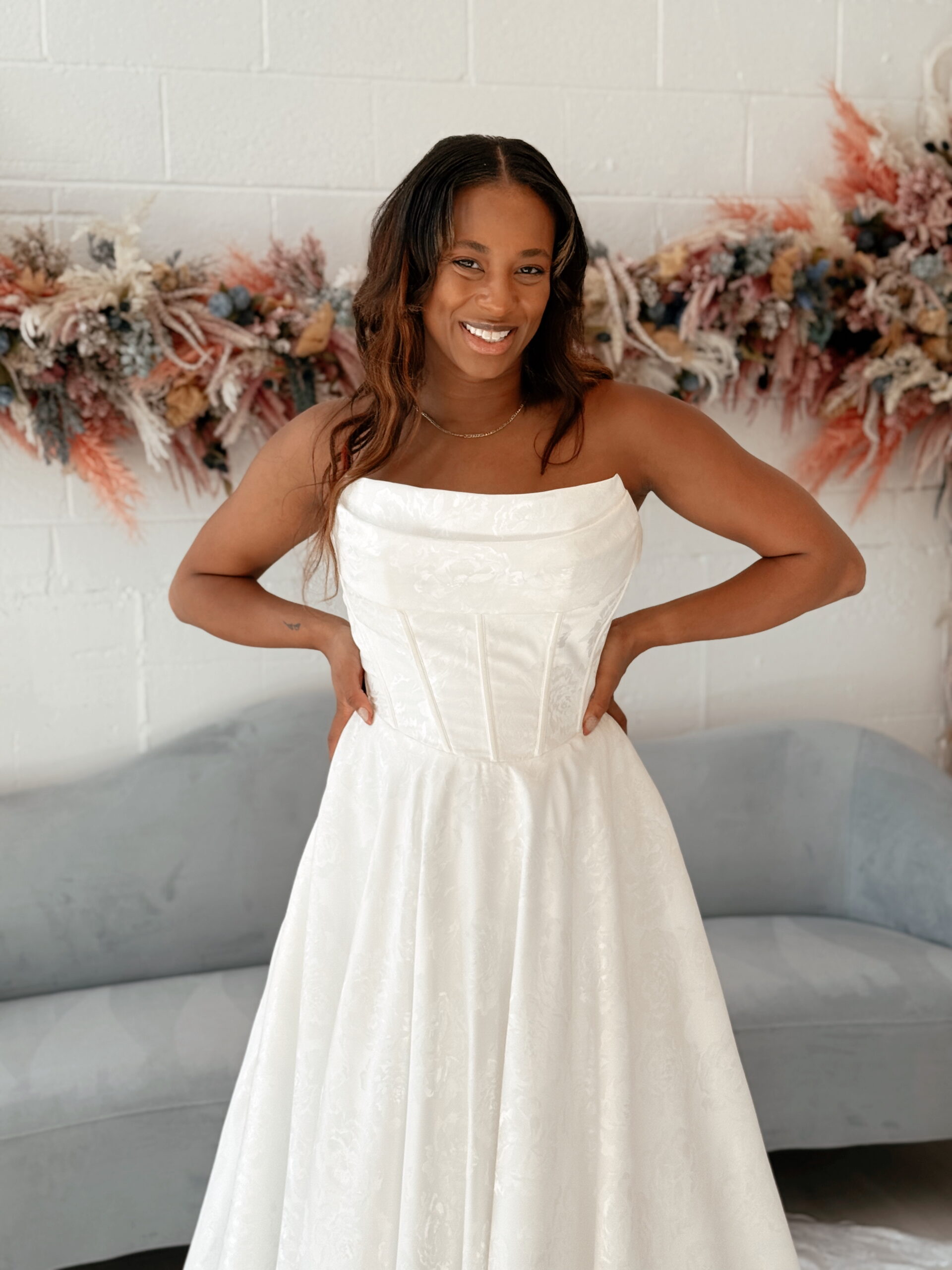
1. Natural Waist
The natural waistline is the most classic and widely flattering style. It sits at the narrowest part of the torso, typically just above the belly button.
Why it works:
- Accentuates the smallest part of the waist
- Creates a balanced, hourglass silhouette
- Flatters nearly every body shape, especially hourglass and pear
Best with: A-line, ball gowns, and fit-and-flare styles
This timeless wedding dress waistline offers elegance and ease while maintaining a structured silhouette.
2. Drop Waist
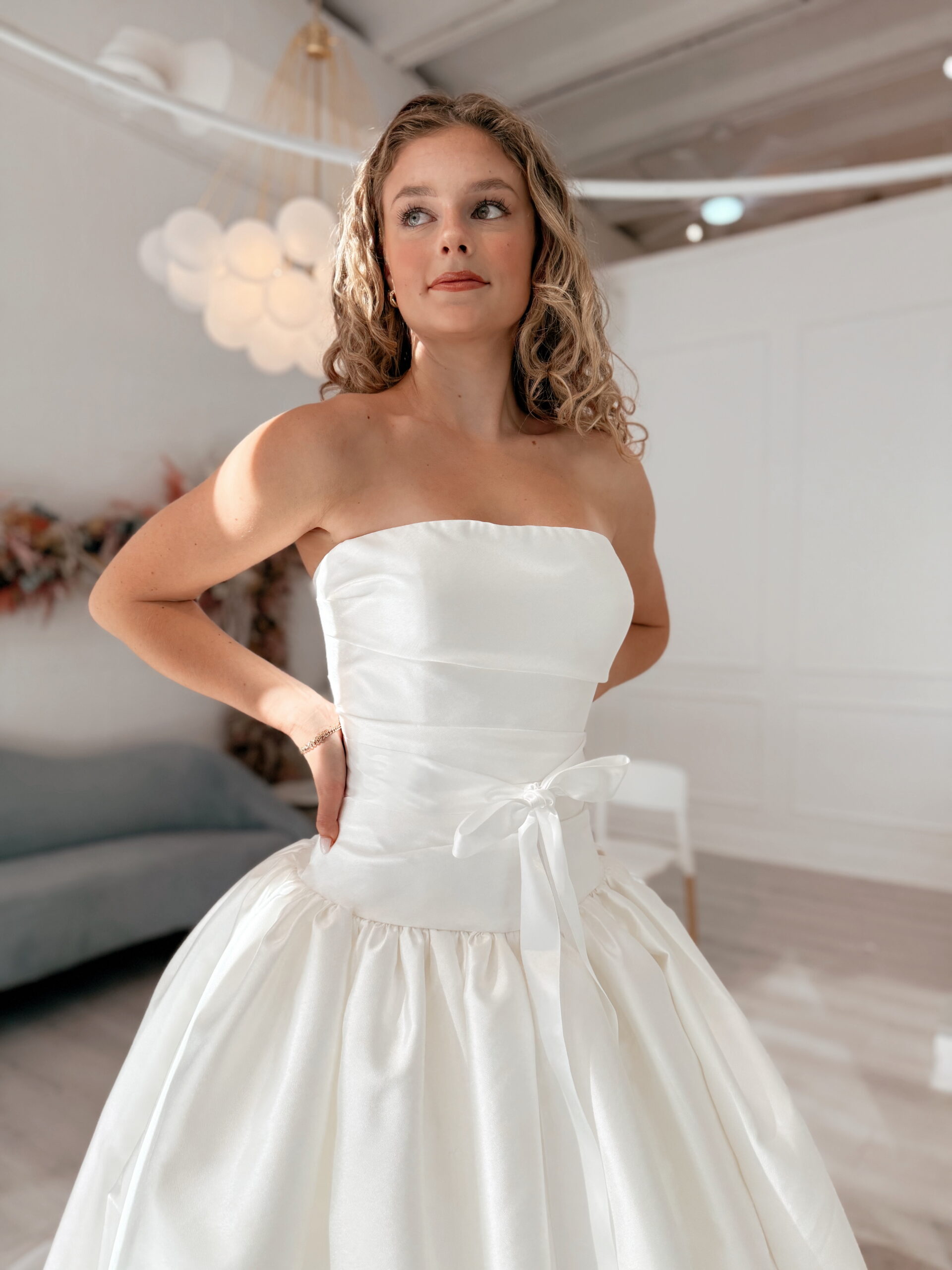
A drop waistline sits below the natural waist, closer to the hips, and elongates the torso for a sleek, contemporary look.
Why it works:
- Adds length to the upper body
- Creates a slim, elongated torso
- Offers a slightly dramatic, fashion-forward feel
Best with: Mermaid, trumpet, and sheath dresses
This style is ideal for tall brides or those with longer torsos who want to balance their proportions with a lower waistline.
3. Empire Waist
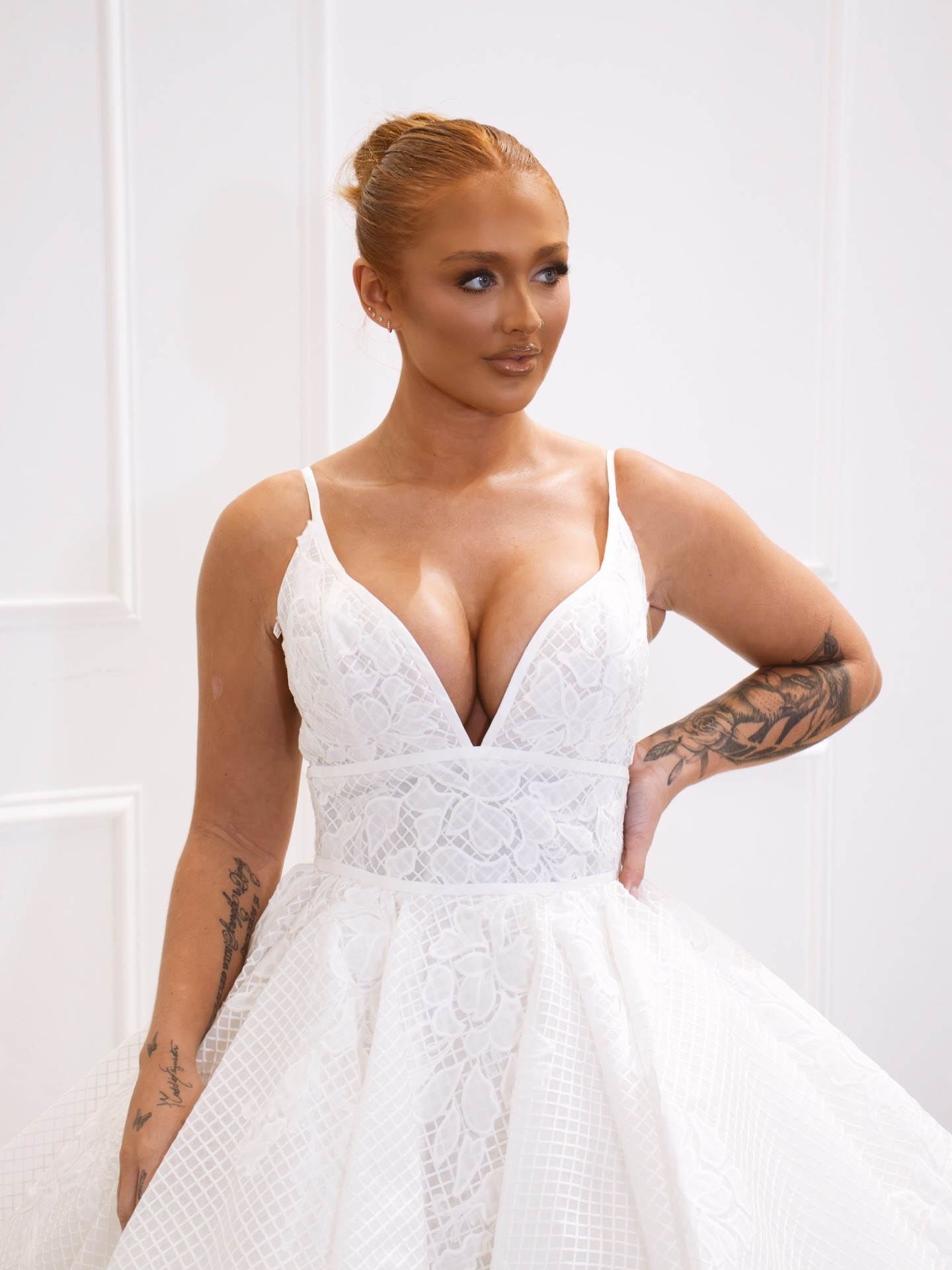
The empire waistline sits just under the bust and flows down from there, making it one of the softest, most romantic types of wedding dress waistlines.
Why it works:
- Emphasizes the bust while flowing over the waist and hips
- Creates the illusion of longer legs
- Offers a light, ethereal look that is ideal for outdoor, boho, or beach weddings
Best with: Flowy, chiffon, or Grecian-style gowns
This waistline is perfect for petite brides, those with shorter torsos, or anyone seeking a comfortable, forgiving fit.
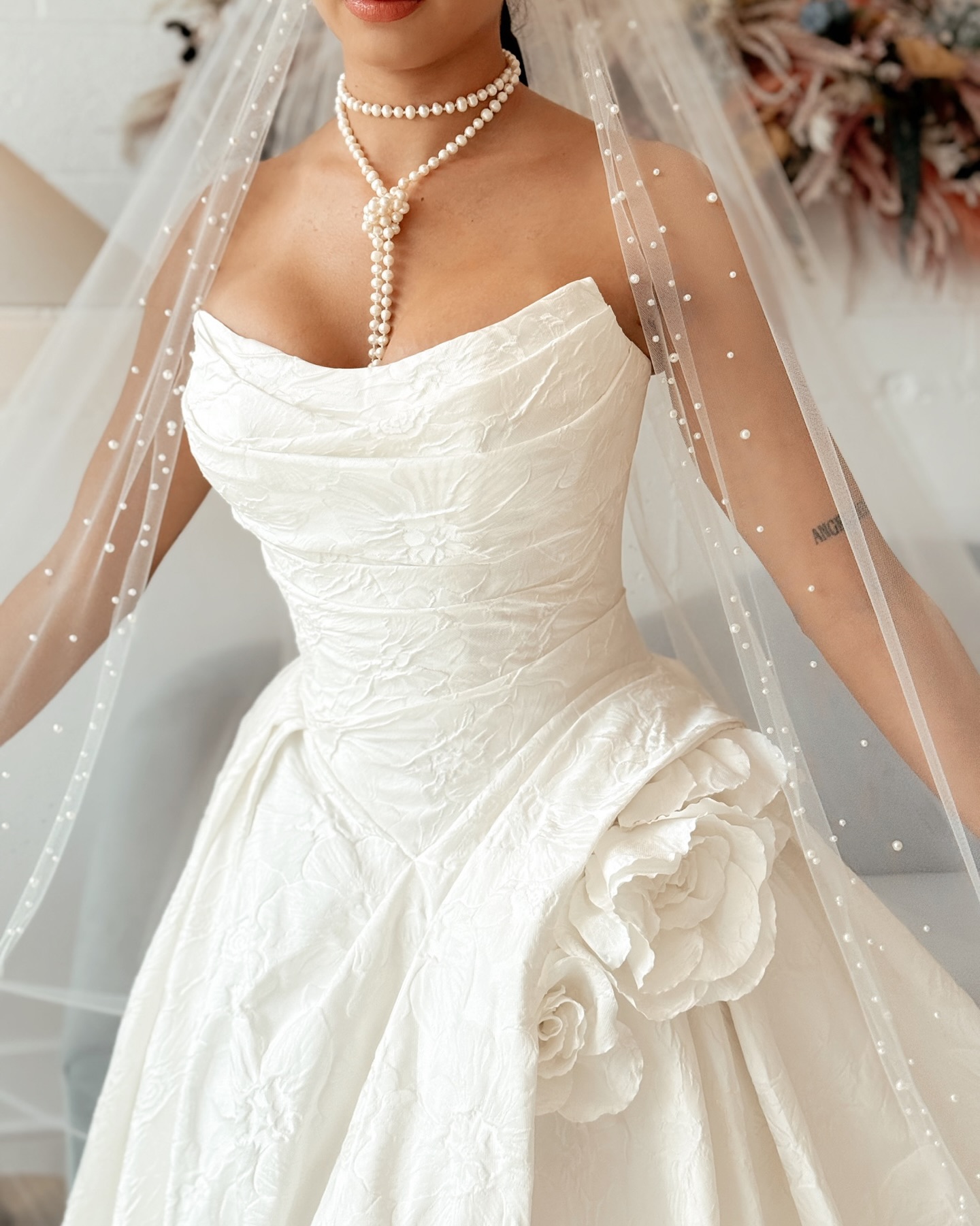
4. Basque Waist
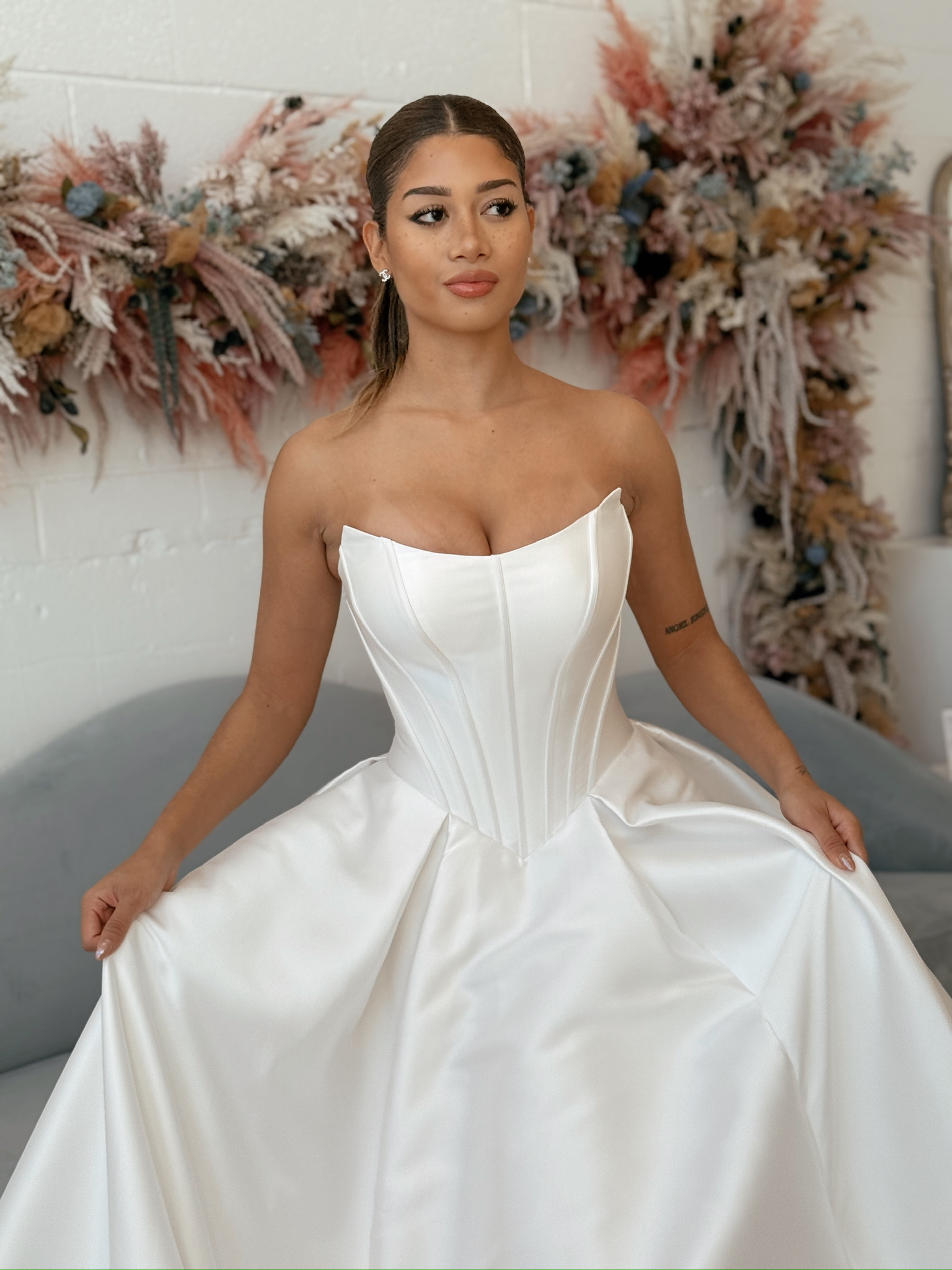
The basque waistline features a dramatic dip, usually in a V or U shape, below the natural waistline, often ending at or just above the hips.
Why it works:
- Visually elongates the torso
- Accentuates curves and narrows the waist
- Creates an elegant, hourglass effect
Best with: Full skirts or traditional ball gowns
Popular in vintage and more formal wedding dresses, the basque waist adds an old-world charm to your bridal look.
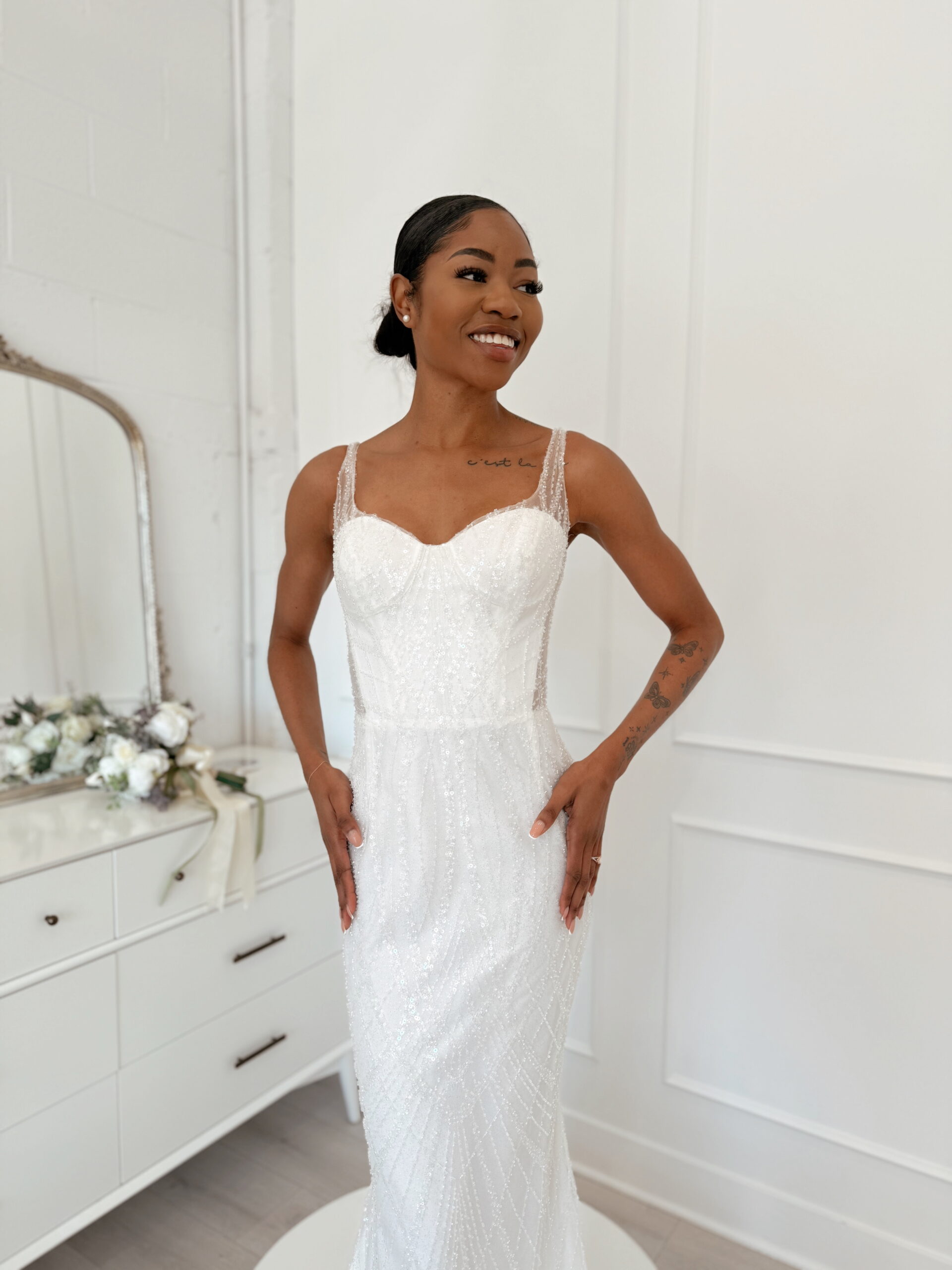
5. Illusion Waist
An illusion waistline isn’t always a literal seam—it’s a visual effect created using sheer fabrics, lace overlays, or clever cutouts. It gives the appearance of a defined waist without traditional structure.
Why it works:
- Adds dimension and detail without rigidity
- Creates curves or softness depending on the dress design
- Offers a modern twist on classic silhouettes
Best with: Sleek or minimalist dresses, and contemporary gowns with sheer or mesh detailing
Illusion waistlines are great for brides who want a sophisticated, fashion-forward take on bridal structure.
6. Asymmetrical Waist
The asymmetrical waistline angles across the body in a diagonal line, creating a unique and flattering silhouette.
Why it works:
- Adds movement and interest to the dress
- Visually slims the waist
- Creates curves and dimension for straighter body types
Best with: One-shoulder gowns and modern or architectural designs
If you’re looking to break tradition and add a touch of edge, the asymmetrical waistline is a bold and flattering choice.
Tips for Finding the Right Wedding Dress Waistline
Choosing a wedding dress waistline isn’t just about the silhouette; it’s also about comfort, confidence, and how well the dress matches your body and personality. Here are a few tips to help you make the best choice.
Understand Your Body Type
Before choosing the perfect wedding dress waistline, it’s essential to understand how different waistlines interact with various body shapes. Every bride has a unique figure, and certain waistlines can help accentuate your best features while creating balance and harmony in your silhouette.
By understanding your proportions and how each wedding gown waistline interacts with them, you can narrow down styles that enhance your natural shape. While these guidelines are helpful, the most important factor is how you feel in the dress. When in doubt, try on multiple kinds of waistlines, as you might be surprised by which one makes you feel most confident and beautiful.
Here’s a breakdown of how to pair the types of wedding dress waistlines with common body types:
Hourglass
If you have a well-defined waist with a bust and hips that are roughly the same width, most waistlines will flatter your figure—especially natural, basque, and illusion styles.
These waistlines highlight the narrowest point of your torso and enhance your balanced proportions. A basque waist, in particular, adds extra emphasis to your curves and elongates the torso for a regal, feminine look.
Pear
If your hips are wider than your bust and shoulders, and you have a well-defined waist, natural, empire, and asymmetrical waistlines are especially flattering. These styles help balance your proportions by drawing attention upward.
An empire waist enhances the bust and shoulders, creating a more balanced silhouette. A natural waistline flatters your shape without emphasizing the hips, while asymmetrical lines add visual movement and create a slimming effect around the waist.
Apple
If you carry weight in the midsection, have a less defined waist, and often have slender legs, empire, illusion, and asymmetrical waistlines can be especially flattering. These styles help elongate and define the midsection while also balancing out a larger bust.
Empire waistlines flow gracefully from just below the bust, minimizing attention to the midsection. Illusion waistlines use visual tricks to create the appearance of a more defined waist, and asymmetrical waists draw the eye diagonally, breaking up the midsection and creating a slimming effect.
Rectangle
If your bust, waist, and hips are fairly uniform in width with minimal curves, drop and asymmetrical waistlines can help create the appearance of more shape and add visual interest.
Drop waistlines elongate the torso and define the hips, while asymmetrical and illusion waistlines add dimension and movement, creating the illusion of curves and enhancing your overall silhouette.
Petite
If you have a shorter height, smaller frame, and may have a shorter torso or legs, empire and natural waistlines can help visually lengthen your frame. High waistlines like empire styles create the illusion of longer legs and added height, while natural waistlines maintain proportion and avoid overwhelming a petite figure.
Asymmetrical waistlines also add vertical interest without adding bulk, enhancing your overall silhouette.
Tall
If you have a longer torso and limbs and a lean, statuesque figure, drop waist, natural waist, and basque waist wedding dresses are especially flattering.
Drop waistlines help break up the length of the torso and create a modern, elongated look, while natural and basque waistlines enhance your frame without adding unnecessary volume, maintaining elegance and balance.
Match Your Style Vibes
Your waistline choice should also align with your wedding day aesthetic and personal taste. Ask yourself:
- Is my wedding formal or casual? (Basque or natural for formal; empire or illusion for relaxed)
- Do I want a modern or traditional vibe? (Asymmetrical and illusion for modern; natural and drop for classic)
- Am I going for princess or minimalism? (Tiaras and ball gowns pair well with basque waists; minimalist sheath dresses often feature illusion or drop waists)
- What hairstyles and accessories am I wearing? Waistline placement can help balance visual weight and silhouette.
Ultimately, the best wedding gown waistline is the one that makes you feel radiant, confident, and authentically you. From creating curves to balancing proportions, the wedding dress waistline plays a powerful role in shaping your bridal look.
As you start dress shopping, keep in mind your body type, comfort level, and personal vibe. Try on different silhouettes, move around, and take photos from every angle. Try to keep an open mind and not exclude certain silhouettes right off the bat, after all, some silhouettes can look flattering on every body type!
Finding the right wedding gown waistline is about more than just fit—it’s about how you feel walking down the aisle in a dress that was truly made for you.
Still searching for a gown that flatters your perfect waistline? Visit Savvy Bridal in Kansas City, St. Louis, or Fort Lauderdale. Our expert stylists will guide you through our selection of designer dresses so you can see firsthand which silhouette makes you feel stunning.
Book your private appointment today and let Savvy Bridal help you find “the one”!