

Wedding Dress Trains Explained: Bustle Types, Lengths, and Practical Tips
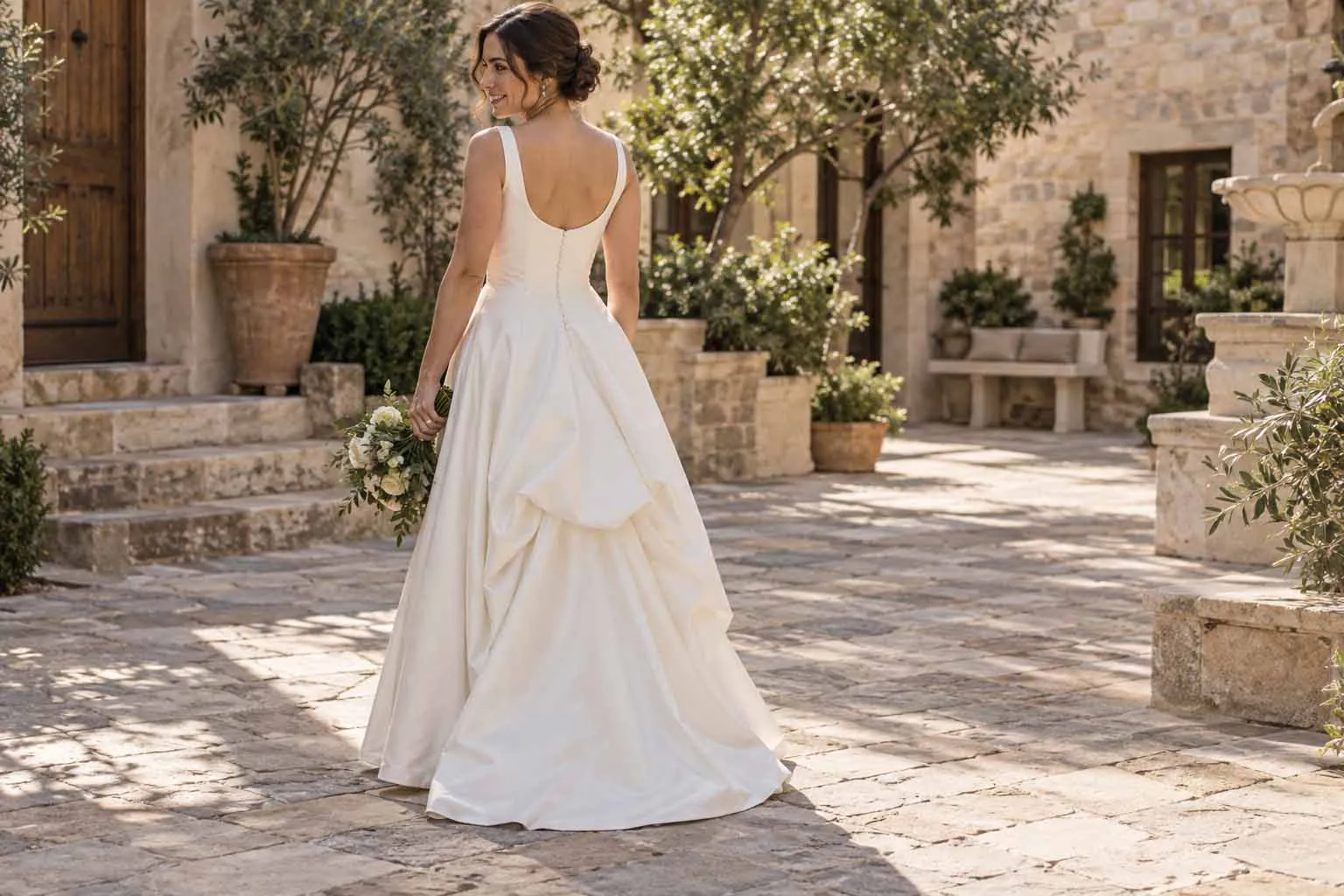
Picture this: you're standing in the boutique, you've just turned toward the mirror, and the train on your dress is doing exactly what you dreamed it would. Then someone in the room asks, "How are you going to dance in that?"
Don't worry, that's exactly what a bustle is for!
Sweep train or chapel train? American bustle or French? What happens at alterations? These are some of the most common questions we hear from brides, and the answers are simpler than you might think.
Whether you're still shopping or you've already said "yes!" to your dress, here's everything you need to know about wedding dress trains, bustles, and how to make your gown work from the ceremony through the last dance.
What Is a Wedding Dress Train?
A wedding dress train is the extra fabric that extends past the hem and trails behind you as you walk. Some trains are just a few inches of flowing fabric. Others stretch several feet down the aisle.
Trains are a big part of what makes a gown feel "bridal." They add drama to your photos and create a stunning view as you walk down the aisle.
Does your dress have to have a train? Not at all. Plenty of beautiful bridal gowns stop right at the floor. If you've fallen in love with a dress but aren't sure about the train, don't worry. A good seamstress can often shorten or remove it during your wedding dress alterations.
The Different Types of Wedding Dress Trains
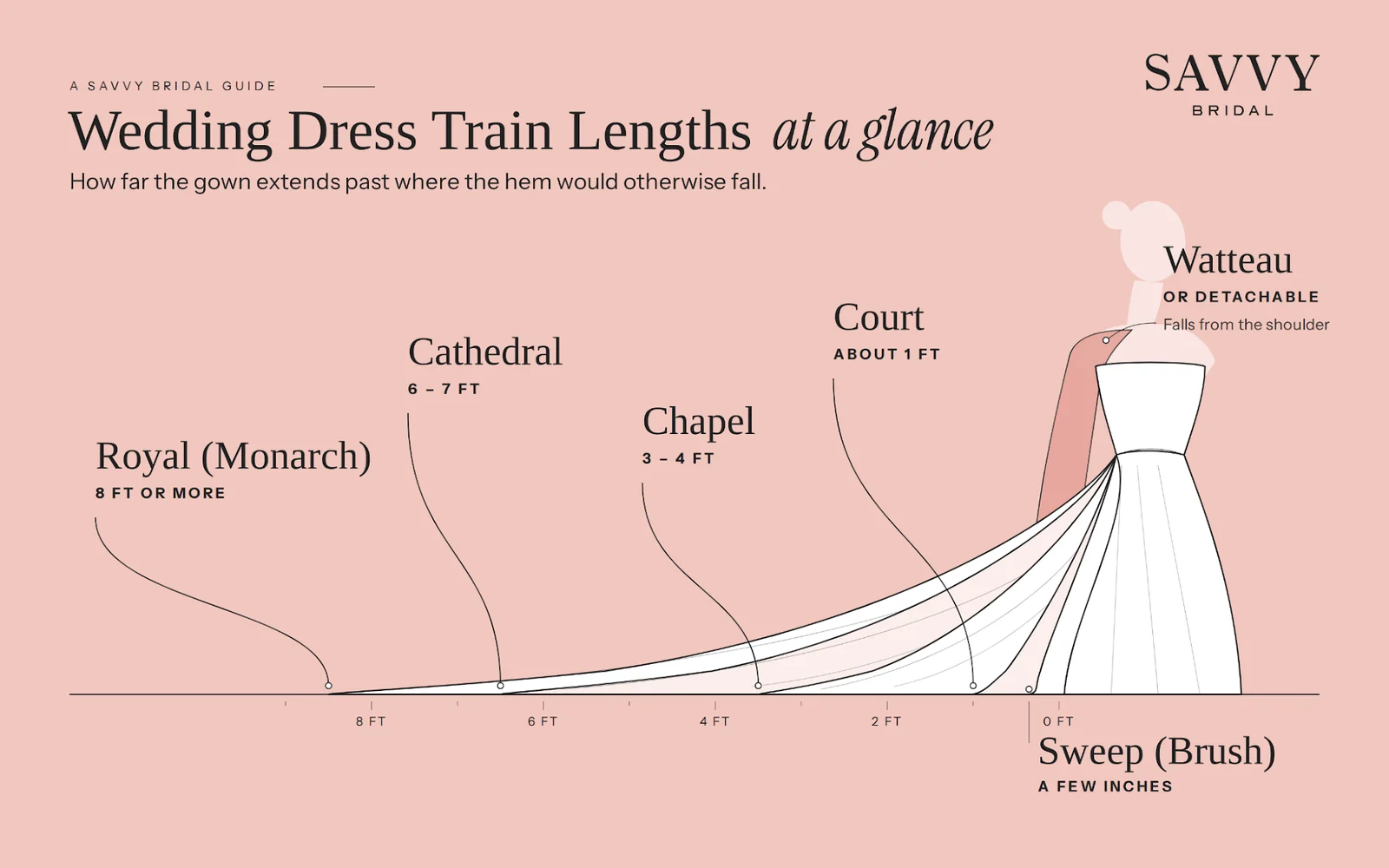
Train names come from how far the fabric extends behind the hem. Here's a quick look at the most common wedding dress train lengths, from shortest to longest.
| Train Type | What to Expect |
|---|---|
| Sweep (Brush) | A few inches past the hem. Easy to walk in and works almost anywhere. |
| Court | About a foot past the hem. A touch more formal but still simple to manage. |
| Chapel | Three to four feet. The most popular choice for brides who want drama without the weight. |
| Cathedral | Six to seven feet. Showstopping, traditional, and best for larger, indoor venues. |
| Royal (Monarch) | Eight feet or more. Reserved for the most formal weddings. |
| Watteau or Detachable | Falls from the shoulder or attaches at the waist. Can come off for the reception! |
Sweep Train
A sweep train (sometimes called a brush train) barely brushes the floor behind you. It adds a little movement to the back of your gown without changing how you walk, sit, or dance.
Sweep trains are perfect for outdoor ceremonies, elopements, beach weddings, and brides who want a clean, relaxed look (or would rather skip the bustle altogether).
Court Train
A court train extends about a foot past the hem. Think of it as the happy medium of train lengths. You get enough fabric to notice in photos, but it's short enough that a single bustle point usually does the trick.
Chapel Train
If you've been wedding dress shopping, you've probably already tried on a chapel train. It's the one we see most often, and for good reason! At three to four feet, it creates a gorgeous line as you walk down the aisle without feeling heavy.
Chapel trains work in nearly any venue and bustle easily, usually with three to five points. (Don't worry, we'll explain bustle points later.)
Cathedral Train
A cathedral train extends six to seven feet behind your gown. This train is for the bride who wants all the glamour: a long, flowing back view, a showstopping processional, and ceremony photos you'll want to frame.
Just keep in mind that more fabric means more weight. A cathedral train takes a little more effort to carry and needs a more involved bustle once the ceremony is over.
Royal, Watteau, and Detachable Trains
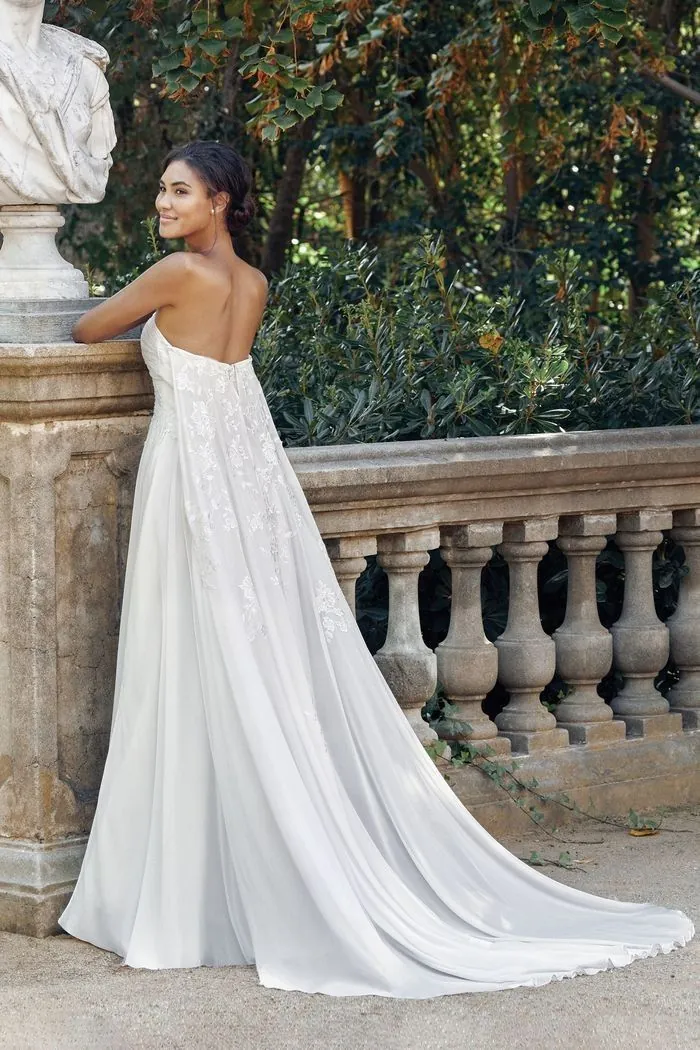
Looking for something a little different? A royal (or monarch) train extends eight feet or more and is usually saved for very formal weddings. A Watteau train falls from the shoulders instead of the waist, and a detachable train can be removed entirely after the ceremony. That way, you get two bridal looks with just one dress.
How to Choose the Right Train Length
Not sure which train length is right for you? Ask yourself:
- Where am I getting married? A cathedral train fills a grand ballroom but can feel like a lot in a small garden.
- What is my dress made of? Heavier fabrics like Mikado and satin make a long train harder to manage. Chiffon and tulle keep things light.
- How do I want to feel at the reception? You'll wear this gown long after the ceremony ends.
The right train should still feel like you when you're dancing and socializing, not just when you're walking down the aisle.
Savvy Tip: Before you decide on a train length, ask your stylist if you can walk, turn, and sit down in the gown. A few everyday movements can help you get a better idea of how the train will perform on the day rather than simply standing still.
What Is a Bustle and Why Does It Matter?
A bridal gown bustle is a set of hooks, buttons, or ribbons sewn into your dress during alterations. After the ceremony, your train gets gathered up and secured to the added bustle points so the hem rests on the floor instead of trailing behind you.
Without a bustle, your train will almost certainly:
- Get stepped on (by you and everyone else)
- Catch on chairs, doorways, and your flower girl
- Pick up everything it slides over
- Make sitting down surprisingly difficult
With a bustle, you can dance, mingle, and hug every single guest without giving your dress a second thought.
Most brides bustle after the ceremony and formal photos, right before heading into the reception. If you have a sweep train, you may not need a bustle at all, though some brides add a single bustle point anyway for a little extra peace of mind on the dance floor.
Types of Wedding Dress Bustles
One of the questions we hear most often is, "What kind of bustle should I get?" The answer depends on your train, your fabric, and how you want the back of your gown to look once it's lifted.
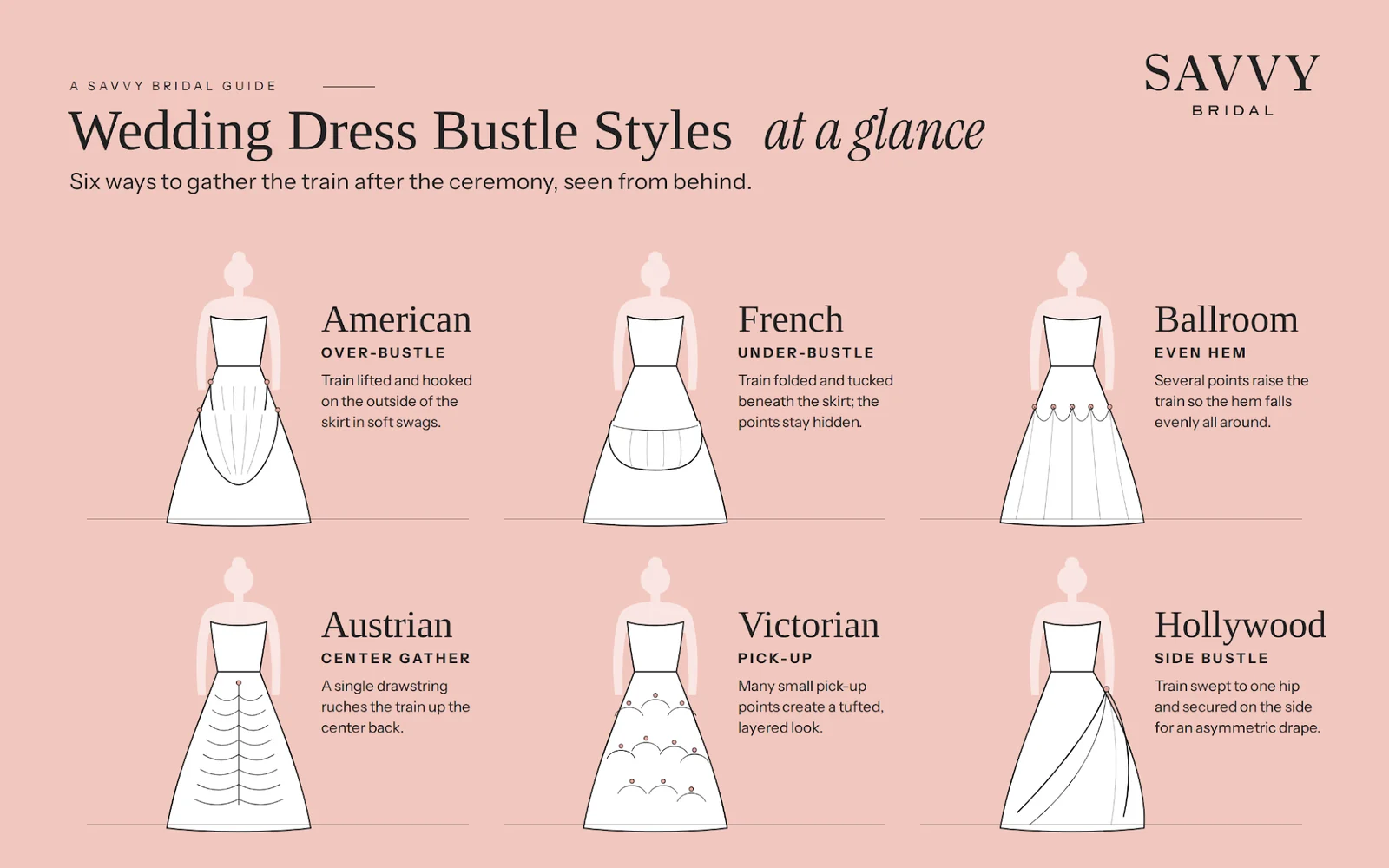
Here are the most common wedding dress bustle types:
| Bustle Type | Best For |
|---|---|
| American (Over) | Almost any train or fabric. Great for beaded or lace gowns where you want the detail on display. |
| French (Under) | Medium to long trains. A clean back view with the bustle hidden underneath. |
| Ballroom | Cathedral and royal trains. Makes a long train look like a floor-length gown. |
| Austrian | Lightweight fabrics. A soft, draped look pulled up through the center. |
| Victorian (Pick-Up) | Full skirts and layered tulle. A romantic, gathered effect. |
| Hollywood (Side) | Fitted or sheath gowns. A sleek drape swept to one side. |
American (Over) Bustle
An American bustle lifts the train up and over the back of the skirt, securing it with hooks or buttons on the outside of the gown. It's the most common bustle type because it works with almost any dress.
The best part? Because the train sits on top, all that gorgeous lace, beading, or embroidery stays right where everyone can see it.
French (Under) Bustle
A French bustle tucks the train underneath the skirt and fastens it with ribbons or hooks hidden inside. The result is a soft, draped look with no visible hardware.
French bustles are a favorite for chapel and cathedral trains, and for brides who want the back of their gown to look polished and seamless from across the room.
Other Bustle Styles to Know
- Ballroom Bustle: Gathers a long train into several points so it disappears into the skirt. Perfect for cathedral trains.
- Austrian Bustle: Pulls the train up through the center for a soft, curtain-like drape.
- Victorian (Pick-Up) Bustle: Creates romantic gathers across a full skirt. Beautiful with layered tulle.
- Hollywood (Side) Bustle: Sweeps the train to one side for a sleek, modern look on fitted gowns.
Matching Your Bustle to Your Train
As a general rule, the longer the train, the more bustle points you'll need:
- Sweep or Court Train: Usually one point
- Chapel Train: Three to five points
- Cathedral Train: A ballroom bustle or multi-point French bustle to keep the weight evenly supported
Then ask yourself one simple question: do you want the back of your gown visible or hidden once it's bustled? If your dress has a dramatic lace back, an American bustle shows it off. If the fabric itself is the star, a French bustle keeps the lines clean.
Not sure yet? That's okay! Your bridal stylist and seamstress will help you figure it out.
Bustles and Wedding Dress Alterations
Here's something that surprises a lot of brides: a bustle isn't built into your gown when you buy it. It's added during wedding dress alterations, usually at the same time as your hem and any fit adjustments.
Love a gown but wish the train were shorter (or longer)? Ask your stylist! Many trains can be adjusted during alterations, too.
How Much Does a Bustle Cost?
Bustle pricing varies by seamstress, but a few things consistently affect the cost:
- The length of your train
- The number of bustle points
- The fabric and how many layers it has
A single-point sweep bustle is a quick job. A multi-point ballroom bustle on layered tulle is not. Ask for a quote at your first fitting so there are no surprises.
Have Someone Learn Your Bustle
On your wedding day, you won't be the one bustling your dress, so assign that job to someone! Your maid of honor, your mom, your wedding planner, or anyone else you trust to be nearby after the ceremony.
Bring them to your final fitting, have your seamstress walk through how to bustle the dress, and take a video just in case. Bustles look deceptively simple in the fitting room, and much less so in a dimly lit reception hall after a glass of champagne.
Savvy Tip: Ask your seamstress to mark each hook and loop with a tiny stitch of colored thread, numbered or color-coded. It makes finding the right pairs so much easier when the lights are low.
Ready to Find the Right Train and Bustle?
You don't need to know your bustle type before you walk through our doors. When considering a wedding dress with a train, our Savvy Bridal stylists will show you how each gown's train moves, talk through what your alterations might look like, and help you picture the whole day, not just the walk down the aisle.
First appointment coming up? Our bridal appointment tips will help you feel ready and confident.
Ready to see how your dream dress moves? Book your appointment with Savvy Bridal today!
Sources: The Knot: wedding dress trains · Zola: train or no train? · Brides: wedding dress bustle styles · The Knot: what is a bustle?